
By the Big on Health editorial team, Ideas in Medicine Ltd.
This is not medical advice. Big on Health is a UK review site. For health worries, speak to your GP, pharmacist or NHS 111. For worries about your parent’s feet or swelling in their feet or legs, see a GP or podiatrist before buying anything.
When Mum or Dad starts finding it harder to get about at home, it’s tempting to buy equipment straight away. Much of it can come free after an assessment, so check the free routes first. This page summarises official guidance from GOV.UK, the NHS and nidirect that we read on 13 Oct 2026.

Start with the free routes
1. A needs assessment from the council
Your parent can ask their council’s social services for a needs assessment. The NHS says the assessment is free, and that equipment and minor home adaptations are provided free in England if your parent is assessed as needing them. An occupational therapist (OT) often does the home part of the assessment and recommends things like grab rails, raised toilet seats or bath aids.
- England, Scotland and Wales: apply for a needs assessment on GOV.UK, which points you to your council.
- Northern Ireland: nidirect says to ask your Health and Social Care Trust for an occupational therapist assessment. You may be able to refer yourself, or your GP or social worker can help.
2. The NHS wheelchair service
The NHS says your parent needs an assessment from the local wheelchair service before they can get an NHS wheelchair. A GP, physiotherapist, occupational therapist or hospital staff can refer them, and in some areas you can refer yourself. The NHS also says some walking sticks can be borrowed through a GP, physiotherapist or OT, sometimes for a deposit.
In Northern Ireland, nidirect says an occupational therapist in your Health and Social Care Trust assesses your parent and recommends a wheelchair through the regional Wheelchair Service.
3. A Disabled Facilities Grant for bigger changes
For larger work, such as a stairlift, a ramp or a level-access shower, your parent may be able to get a Disabled Facilities Grant. In Northern Ireland, major adaptations go through the Northern Ireland Housing Executive after an OT recommendation. Our Disabled Facilities Grant guide explains who can get one and how to apply.
VAT relief if you buy equipment yourself
GOV.UK says that if someone is disabled or has a long-term illness, they are not charged VAT on products designed or adapted for their own personal or domestic use. That also covers installation, repairs, maintenance, and spare parts or accessories. GOV.UK gives examples including certain adjustable beds, stairlifts, wheelchairs, alarms, and building work such as ramps or widened doors.
Two points from GOV.UK to know before you buy:
- Your parent does not qualify just for being older. They must have a physical or mental impairment that affects everyday activities, a chronic condition such as diabetes, or a terminal illness. A temporary disability does not count.
- They will need to confirm this in writing, and the supplier may give you a form to fill in.
Ask the supplier whether the product qualifies before you pay.
Comfortable footwear for swollen feet
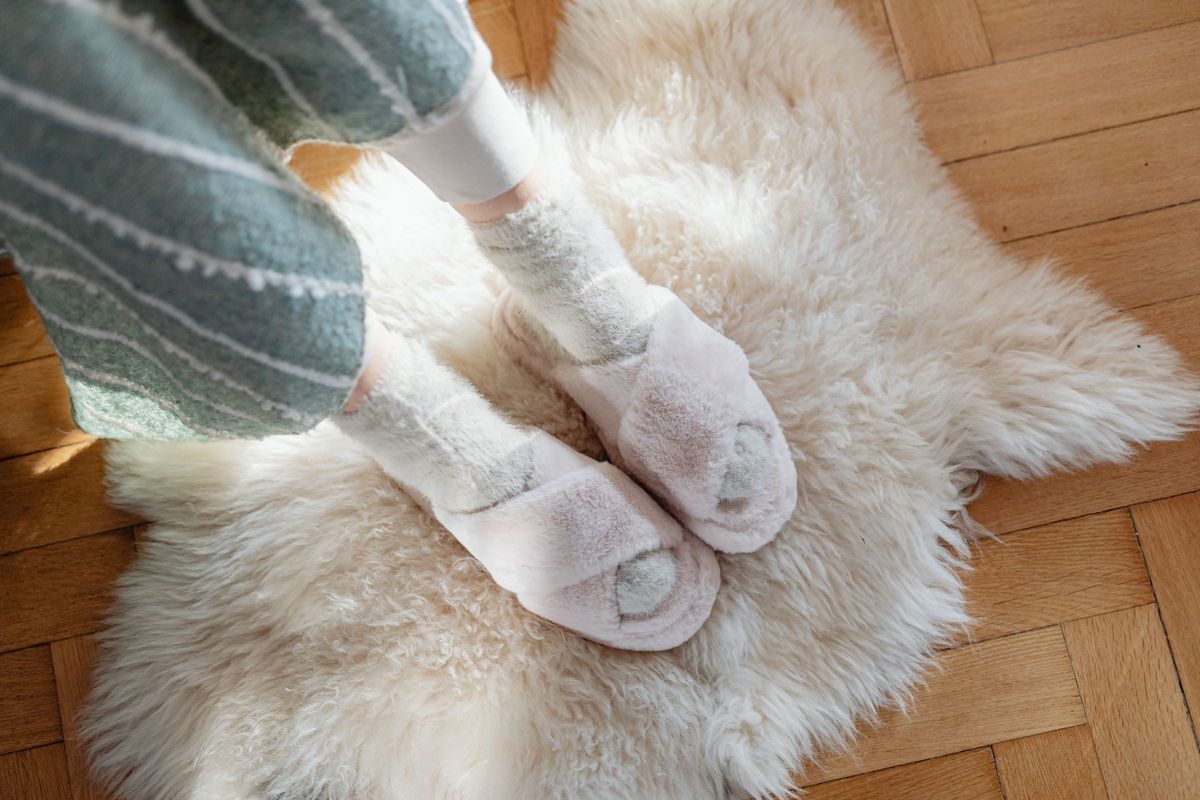
Swollen feet can make ordinary shoes and slippers painful, and footwear that doesn’t fit can make walking less steady. Swelling can have many causes, so have it checked by a GP or podiatrist first, especially if it is new, getting worse or only on one side.
If your parent’s feet are already checked and they need roomier shoes, look for:
- extra width and depth, not just a longer size
- adjustable fastenings, so the fit can change as swelling goes up and down through the day
- a firm, enclosed heel rather than a backless slipper
- an easy returns policy, because fit is hard to judge online
Ad. One UK specialist is Cosyfeet. On its website (read 13 Oct 2026), Cosyfeet says its extra-wide footwear is designed for swollen or extra-wide feet, and that all its styles are made to a 6E fitting for women and 3H for men, with adjustable designs. It also offers free UK returns and exchanges, and says VAT relief is available on its footwear if you have a qualifying long-term condition. Cosyfeet’s site lists UK delivery; outside the UK it sells only in Australia, through a separate distributor, so treat it as a UK-only shop. If you buy through this link, Ideas in Medicine Ltd, trading as Big on Health, may earn a commission. That does not change what you pay.
New to Cosyfeet? Use code CFAWIN10 for 10% off your first order (UK delivery only; excludes sale items and delivery; terms apply).
When equipment isn’t enough
If your parent needs a hand with washing, dressing or getting about each day, equipment may only be part of the answer. Our guide to home and live-in care costs in 2026 sets out what help at home costs, and our guide to finding a private carer explains how to get started.
Ad. If equipment is not enough on its own and you also need short-notice care, you can browse self-employed carers on PrimeCarers and see their rates up front. If you register through this link, Ideas in Medicine Ltd, trading as Big on Health, may earn a commission. That does not change what you pay.
Sources
All read on 13 Oct 2026.
- GOV.UK: Get a needs assessment
- GOV.UK: VAT relief for disabled people
- NHS: Household gadgets and equipment to make life easier
- NHS: Walking aids, wheelchairs and mobility scooters
- nidirect: Equipment for disabled people
- nidirect: Adapting your home
- Cosyfeet: home page (Ad) (for the product details quoted above)
The registered company is Ideas in Medicine Ltd, trading as Big on Health (SC505248). Contact: enquiries@bigonhealth.com. There is no public telephone number on this site.