
By the Big on Health editorial team, Ideas in Medicine Ltd.
This is not medical, legal or financial advice. Big on Health is a UK review site. For health worries, speak to your GP, pharmacist or NHS 111. If you think someone is having a stroke, call 999.
When Mum or Dad comes home after a stroke, family can find themselves helping almost overnight. The NHS says recovery varies: for some it takes days or weeks, for others months or years, and may mean changes such as adapting the home. This page sets out the free support to ask for, your rights as a carer, and where paid help at home fits. We read every source on 16 Oct 2026.
Ad. Need extra help at home? You can browse self-employed carers on PrimeCarers and see their rates up front. If you register through this link, Ideas in Medicine Ltd, trading as Big on Health, may earn a commission. That does not change what you pay.
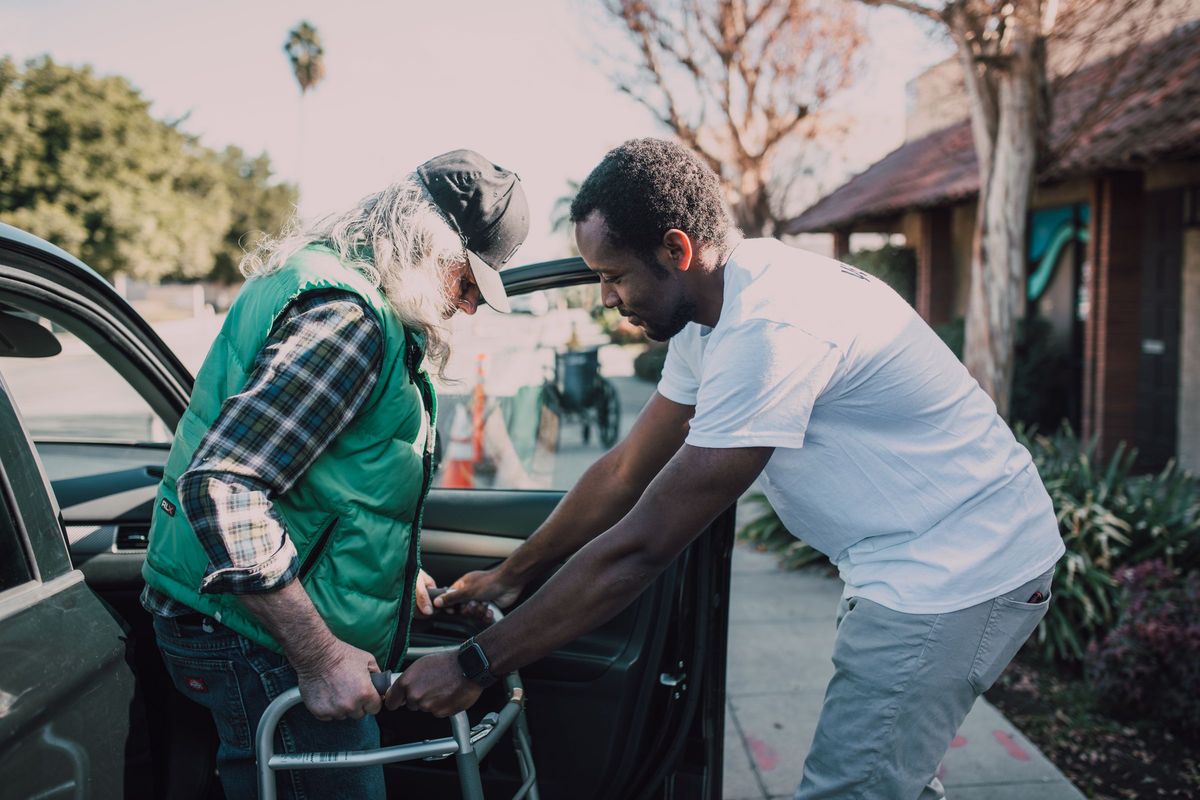
Leaving hospital: the home recovery plan
The NHS says the healthcare team creates a home recovery plan when someone is discharged after a stroke. It may include:
- physiotherapy and exercises to help with movement;
- help with speech, swallowing and vision;
- activities for memory, concentration, thinking and mood;
- talking therapy (CBT) for anxiety, depression and tiredness;
- advice and treatment for bowel or bladder problems.
Rehab can be in person or online. The team should make sure the right equipment is at home, with training to use it. After about 6 months there should be a progress review. If it doesn’t happen, ask the team.
Free short-term care first (England)
The NHS social care guide says people leaving hospital may be offered intermediate care, also called reablement. It is free, usually lasts up to 6 weeks at most, and most people get it at home. A team that may include an occupational therapist, physiotherapist, speech and language therapist and care workers helps the person relearn things like dressing, cooking and stairs.
Before it ends, the team should agree what happens next, including any long-term care. A council needs assessment and a financial assessment may follow. For more, see Care at home after a hospital stay.
Tip. The Stroke Association suggests four first steps for carers: register as a carer with the GP, check benefits and grants, ask adult social services for a care needs assessment and a carer’s assessment, and connect with other carers.

Four nations: your carer’s assessment
| Nation | What to ask for | Who from |
|---|---|---|
| England | A carer’s assessment. The NHS says a regular unpaid carer is entitled to one. | Adult social services at the council |
| Scotland | An Adult Carer Support Plan, including an emergency care plan. | The council’s social care department or a carer centre |
| Wales | A carer’s needs assessment. Your right to one is not affected by how much money you have, though you may be asked to contribute to support. | Your local authority |
| Northern Ireland | A carer’s assessment if you give regular and significant care. It can lead to a break from caring. | Your Health and Social Care Trust |
More on this in A carer’s assessment in the UK.
When paid help at home makes sense
If the free short-term care ends and help is still needed, families may top up council care or pay privately. Ask any carer about stroke experience, moving and handling, and how they will support the exercises in the recovery plan. Our Home care costs UK 2026 guide lists published prices with their sources.
When to get urgent help
Quoted from NHS pages on stroke, TIA, falls and care after hospital.
- Call 999 now if you think someone is having or has had a stroke. FAST: Face drooping on one side, Arm weakness, Speech slurred or confused, Time to call 999.
- Call 999 if there have been signs of a stroke in the last 24 hours, even if they have stopped.
- Other stroke signs include weakness or numbness down one side, blurred vision or loss of sight, confusion, dizziness or falling over, a severe headache, and being sick.
- Call 999 after a fall if they may have injured the head, back, neck or hip, or cannot get up. Do not try to lift them yourself.
- NHS 111 if they have fallen and may be in pain, injured or unwell, or if you need help right now and cannot contact the GP surgery.
- Urgent GP appointment if you think they had a mini-stroke (TIA) earlier and did not get help at the time.
Ad. If private care at home looks right, you can compare carers on PrimeCarers. Ask about stroke experience, references and DBS checks. If you register through this link, Ideas in Medicine Ltd, trading as Big on Health, may earn a commission. That does not change what you pay.
Related guides
- Care at home after a hospital stay
- Preventing falls at home: footwear and simple changes
- Dementia care at home in the UK
- Mobility and daily-living equipment for an older parent
- A carer’s assessment in the UK
- Finding a private carer in the UK
- Home and live-in care costs UK 2026
Sources
All read on 16 Oct 2026.
- NHS: Recovering from a stroke
- NHS: Symptoms of a stroke
- NHS: Transient ischaemic attack (TIA)
- NHS: Falls
- NHS: Care to support recovery after leaving hospital
- Stroke Association: Caring for someone close to you
- mygov.scot: Adult Carer Support Plan
- GOV.WALES: Carers’ rights
- nidirect: Assessments for carers
The registered company is Ideas in Medicine Limited, trading as Big on Health (SC505248). Contact: enquiries@bigonhealth.com. There is no public telephone number on this site.