
By the Big on Health editorial team, Ideas in Medicine Ltd.
This is not medical, legal or financial advice. Big on Health is a UK review site. For health worries, speak to the GP, respiratory nurse, pharmacist or NHS 111. If someone is struggling to breathe, or is in immediate danger, call 999.
COPD usually changes slowly, and so does the help a person needs at home. Many people manage well for years with the right treatment. For others, breathlessness gradually makes washing, dressing, shopping and cooking harder. This page is for families in the UK supporting someone with COPD at home. It covers what COPD is, the NHS support to ask for, how to keep on top of inhalers and medicines, what a paid carer can help with, and how care is assessed and charged in each of the four UK nations. We checked every source on 26 Oct 2026.
Ad. Looking for a regular carer to help with the tasks that leave someone with COPD out of breath? You can browse self-employed carers on PrimeCarers and see their rates up front. If you register through this link, Ideas in Medicine Ltd, trading as Big on Health, may earn a commission. That does not change what you pay.
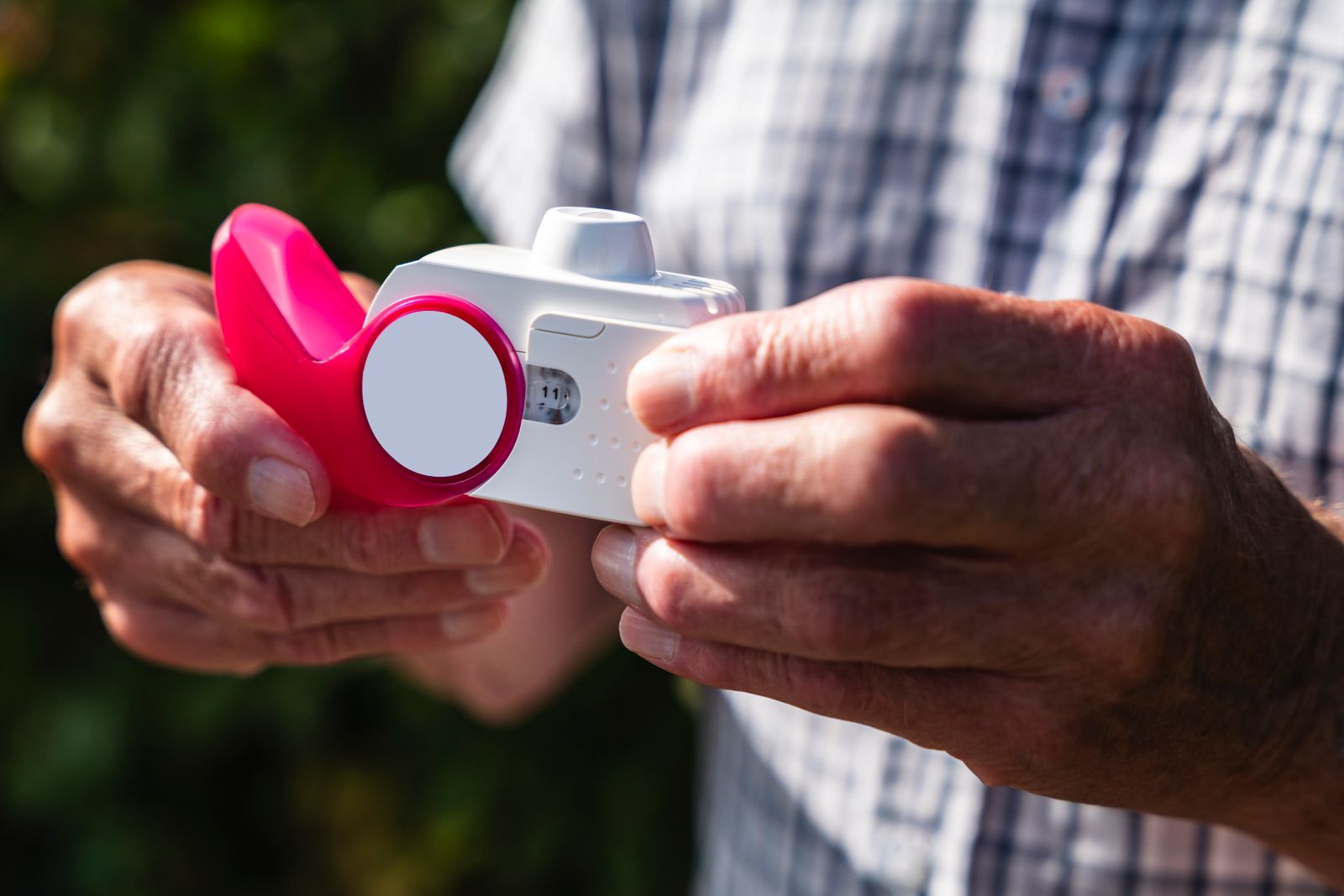
What COPD is, in plain English
The NHS describes chronic obstructive pulmonary disease (COPD) as the name for a group of lung conditions that cause breathing difficulties. It includes emphysema, which is damage to the air sacs in the lungs, and chronic bronchitis, which is long-term inflammation of the airways. It mainly affects middle-aged or older adults who smoke, and the NHS says smoking is thought to be responsible for around 9 in every 10 cases. Long-term exposure to some dusts and fumes at work, and a rare genetic condition called alpha-1-antitrypsin deficiency, can also play a part.
The main symptoms, according to the NHS, are shortness of breath (particularly when active), a persistent chesty cough with phlegm, frequent chest infections and persistent wheezing. The damage to the lungs is permanent and COPD cannot be cured, but treatment can help slow it down and keep it under control. For many people, the NHS says, it does not severely limit daily activities. For some, it continues to get worse despite treatment.
How COPD can affect daily life at home
At home, families often first notice:
- Breathlessness with everyday tasks. Stairs, washing, dressing and carrying shopping take longer, or need pauses. The NHS says some people wake at night feeling breathless.
- Flare-ups. The NHS says it is common to have a few flare-ups (exacerbations) a year, particularly during the winter, when symptoms suddenly get worse.
- Tiredness and weight loss. Asthma + Lung UK says some people with COPD lose weight without meaning to, for example because eating makes them breathless or because shopping and preparing meals has become hard.
- Low mood and worry. Asthma + Lung UK says breathlessness, coughing, tiredness and being less active can leave people feeling stressed, anxious or depressed. It is worth raising this with the GP.
The NHS support to ask about
NICE guidance on COPD (NG115) says care should be delivered by a multidisciplinary team, and that people with COPD should be reviewed at least once a year, and at least twice a year in primary care if their COPD is very severe. Asthma + Lung UK says reviews may need to be more regular for people using treatments such as long-term oxygen or non-invasive ventilation.
- A self-management plan. NICE says an individualised self-management plan should be developed with each person with COPD and, where appropriate, their family members or carers, and reviewed at future appointments. Asthma + Lung UK says a plan keeps everyday advice, how to spot and treat flare-ups, and when to see a healthcare professional in one place, and suggests sharing it with family and carers.
- A flare-up action plan. NICE says people at risk of flare-ups should have an individualised exacerbation action plan. Some people are given a short course of steroid tablets and antibiotics to keep at home, often called a rescue pack.
- Pulmonary rehabilitation. This is a programme of exercise and education for people whose breathing limits what they can do. The NHS says programmes usually involve 2 or more group sessions a week for at least 6 weeks. Asthma + Lung UK says the GP, practice nurse or respiratory team can refer, that some programmes have waiting lists, and that you may be able to bring a family member or carer.
- Vaccines. The NHS encourages everyone with COPD to have the annual flu jab and the one-off pneumococcal vaccine. The NHS flu vaccine page also lists the main carer for an older or disabled person, or someone who gets Carer’s Allowance, as eligible for a free flu jab.
- Occupational therapy and social services. NICE says clinicians should regularly ask people with COPD about their ability to manage daily activities, assess their need for occupational therapy, and consider referring people with disabilities caused by COPD for assessment by social services.
Inhalers and medicines: keep the routine steady
The NHS says it is important to take any prescribed medicine, including inhalers, as this can help prevent bad flare-ups. Doses and timings are different for each person and are set by the GP, nurse or specialist, so this page does not give doses. Practical points for a family or a paid carer:
- Write the routine down. List each inhaler and medicine and when it is taken, and keep the list where every carer can see it, alongside the self-management plan.
- Know which inhaler is which. The NHS explains that short-acting “reliever” inhalers are used when someone feels breathless, while long-acting inhalers are used regularly. Asthma + Lung UK says steroid inhalers should never be stopped just because someone feels well.
- Ask for a technique check. Asthma + Lung UK says using the correct inhaler technique means the medicine works properly, and that a pharmacist can check technique. NICE says an alternative inhaler should be provided if someone cannot use one correctly.
- Check before adding anything. The NHS says to check with the care team before taking over-the-counter remedies, such as painkillers or supplements, as these can sometimes interfere with COPD medicine.
- Tell the GP when the rescue pack is used. Asthma + Lung UK says to always tell your healthcare professional if a rescue pack is used, so they can review treatment, and NICE says to ask for replacements.
- Keep enough medicine in. The NHS suggests watching the weather forecast, as cold spells and hot, humid weather can cause breathing problems, and making sure there is enough medicine to hand.
Tip. If you pay for a carer, agree in writing what help with medicines they will and won’t give, for example reminders at set times. Share the self-management plan and the name of the GP practice or respiratory nurse to contact if breathing gets worse.
Making home easier to breathe in
The NHS lists things to avoid where possible to reduce COPD symptoms and the chance of a flare-up, including smoke, dusty places, fumes, air freshener sprays or plug-ins, strong-smelling cleaning products (unless there is plenty of ventilation), hairspray and perfume. This matters for anyone who cleans or visits the home, including a paid carer. If the person smokes, the NHS says stopping is the most important thing they can do, and free help is available from the GP and NHS stop smoking services.
If home oxygen is prescribed, the NHS says not to smoke when using it, because the extra oxygen is highly flammable. NICE says the risks include burns and fires, and falls from tripping over equipment, which is worth bearing in mind when planning furniture and walkways. See Preventing falls at home.
What a paid carer can help with
The NHS says a paid carer can visit for anything from an hour a week to several hours a day, or at night. They can help with getting out of bed, washing and dressing, using the toilet, preparing meals and drinks, remembering to take medicines, shopping, collecting prescriptions, getting out and getting ready for bed. Some people need a live-in carer. The NHS gives a cost of £15 to £30 an hour for help at home from a paid carer, varying by area, and says the council will sometimes contribute.
For someone with COPD, help with the tiring jobs can make the biggest difference: shopping and cooking so meals still happen, a hand with washing and dressing at a gentle pace, and company on the way to pulmonary rehabilitation or appointments. When you look for a carer, it is fair to ask:
- Have you supported someone with COPD or another long-term lung condition before?
- Are you comfortable working at the person’s pace, with pauses for breath?
- Will you avoid aerosol sprays, strong cleaning products and smoking in or near the home?
- Do you know the signs of a flare-up, and what would you do if breathing suddenly got worse?
- Can you keep to fixed visit times, and who covers if you are ill?
- Can you show references and an up-to-date DBS check?
Our guides Finding a private carer in the UK and Questions to ask before hiring a carer walk through the checks. If nights are the hardest part, see Overnight care at home.
Start with a free needs assessment
The NHS says a care needs assessment from the council is free and anyone can ask for one. Even if the council does not pay for care, it must still give free advice about where to get help in the community. A family carer can also ask for a carer’s assessment, which the NHS says is free for anyone over 18. NICE says people with COPD and their family members or carers should be offered written information and the chance to talk to a healthcare professional with COPD experience at diagnosis and at each review. See A carer’s assessment in the UK and Respite care in the UK.
Four nations: assessment and charges for care at home
| Nation | Who assesses | Charges for care at home | Carer’s support |
|---|---|---|---|
| England | Adult social services at the local council. | Means-tested. The council works out what the person pays in a financial assessment based on income and savings. If the council pays for some or all of the care, it must give a care and support plan. | A carer’s assessment from the council. |
| Scotland | The council’s social work department. mygov.scot says a doctor, district nurse or health visitor can also arrange an assessment. | mygov.scot says personal care from the council is free if the assessment shows it is needed, regardless of age, income or savings. Other help, such as housework or shopping, may be charged. | An Adult Carer Support Plan from the council. |
| Wales | The local authority. | GOV.WALES says the most you can be charged for non-residential care is £100 a week, after a financial assessment. You may pay up to that maximum if you have savings over £24,000, not counting your home, or a high disposable income. | A carer’s needs assessment from the local authority. |
| Northern Ireland | The local Health and Social Care Trust. | Alzheimer’s Society says Trusts usually don’t charge for services in a person’s home, with exceptions such as a means-tested charge for home help (not charged for people over 75) and a fixed charge for meals on wheels. | A carer’s assessment from the Trust. |
Rules and figures change, so check with the council or Trust before making plans. The NHS says people with COPD may be entitled to Personal Independence Payment, and someone caring for them may be entitled to Carer’s Allowance. For help with costs, see Paying for private care in the UK.
Ad. If paying for help at home looks right, you can compare carers on PrimeCarers, from a few hours a week to live-in support. Ask about experience with COPD, working at the person’s pace, a smoke-free and spray-free routine, references and DBS checks. If you register through this link, Ideas in Medicine Ltd, trading as Big on Health, may earn a commission. That does not change what you pay.
After a flare-up or a hospital stay
Asthma + Lung UK says COPD flare-ups usually last seven to ten days, that most people fully recover within four to six weeks, and that some people never feel quite as well as they did before. It says everyone should have a follow-up appointment with their GP once they feel better, whether they were treated at home or in hospital. Some areas offer virtual wards, sometimes called hospital at home, where hospital-level care for a flare-up is given at home. NICE says hospital-at-home and assisted-discharge schemes are safe and effective. Extra help at home in the weeks after a flare-up can take the pressure off. See Care after a hospital stay.
Planning ahead
The NHS says COPD can eventually reach a stage where it becomes life-threatening, and that talking about and planning end of life care in advance can help. It says the doctor should work with the person on a clear plan based on their wishes, including whether they would prefer hospital, a hospice or care at home. NICE says people with end-stage COPD and their families or carers should have access to the full range of palliative care services, including hospices. See Lasting Power of Attorney for a parent and Live-in care in the UK.
When to get urgent help
- Call 999 if, as Asthma + Lung UK advises, the person is finding it very hard to breathe (gasping, choking or unable to speak), their chest feels tight or heavy, they have pain spreading to the arms, back, neck or jaw, their lips or skin are turning very pale or blue, or they are suddenly confused. Call 999 too after a fall if they may have injured the head, back, neck or hip, or cannot get up.
- NHS 111 if you are worried and it is not an emergency, or they have fallen and may be in pain or unwell.
- GP or respiratory team if symptoms get suddenly worse or new symptoms develop between check-ups, as the NHS advises, or if the rescue pack has been used.
Related guides
- Finding a private carer in the UK
- Questions to ask before hiring a carer
- A carer’s assessment in the UK
- Paying for private care in the UK
- Respite care in the UK
- Overnight care at home
- Live-in care in the UK
- Preventing falls at home: footwear and simple changes
Sources
All checked on 26 Oct 2026.
- NHS: Chronic obstructive pulmonary disease (COPD)
- NHS: COPD symptoms
- NHS: COPD causes
- NHS: COPD treatment
- NHS: Living with COPD
- NICE NG115: COPD in over 16s, recommendations
- Asthma + Lung UK: What can you do to manage your COPD?
- Asthma + Lung UK: Treatments and medicines for COPD
- Asthma + Lung UK: What is a COPD flare-up?
- Asthma + Lung UK: Your COPD self-management plan
- Asthma + Lung UK: Pulmonary rehabilitation
- NHS: Flu vaccine
- NHS: Pneumococcal vaccine
- NHS: Help at home from a paid carer
- NHS: Getting a care needs assessment
- NHS: Carer’s assessments
- NHS: Falls
- mygov.scot: Costs of personal and nursing care
- mygov.scot: How to get personal and nursing care
- mygov.scot: Adult Carer Support Plan
- GOV.WALES: Charging for social care
- GOV.WALES: Carers’ rights
- nidirect: Support to stay in your own home
- nidirect: Assessments for carers
- Alzheimer’s Society: Care plans and financial support in Northern Ireland
This page is general information, not medical, legal or financial advice. Always follow the advice of the GP, respiratory nurse or specialist team who know the person, and check care rules with the local council or Health and Social Care Trust.
The registered company is Ideas in Medicine Limited, trading as Big on Health (SC505248). Contact: enquiries@bigonhealth.com. There is no public telephone number on this site.