
By the Big on Health editorial team, Ideas in Medicine Ltd.
This is not medical, legal or financial advice. Big on Health is a UK review site. For health worries, speak to the GP, pharmacist or NHS 111. If someone is seriously ill, injured or in immediate danger, call 999.
Winter is often when families first notice that an older parent is finding things harder. The house is colder, the evenings are darker, pavements get icy, and a cold or a fall can knock someone’s confidence for weeks. This page is a practical checklist for adult children in the UK supporting a parent who still lives at home, whether you live round the corner or hours away. It covers warmth, falls and footwear, the winter heating payments in each UK nation, the free flu jab for unpaid carers, and what to put in place if you can’t be there. We checked every source on 26 Oct 2026.
1. Warmth: keep the rooms they use warm
The NHS says keeping warm over the winter months can help to prevent colds, flu and more serious health problems such as heart attacks, strokes, pneumonia and depression. Its advice is to heat the home to a temperature that is comfortable, and if possible at least 18°C in the rooms used regularly, such as the living room and bedroom. It says this is particularly important for someone with a health condition, and that it is best to keep bedroom windows closed at night.
- Check the heating works before the first cold snap. The NHS says to check heating and cooking appliances are safe, using a Gas Safe registered engineer.
- Check fire safety. The NHS points people to the online home fire safety check for advice specific to the home.
- Look at the thermostat together. Some older people turn the heating down to save money. A calm conversation about the payments below can help.
- Stock the cupboards. The NHS suggests making sure an older relative has enough food in for a few days in case they cannot go out.
- Keep in touch. The NHS says to ask older relatives and neighbours if they need practical help or are feeling unwell. If you are worried about an older relative, it says you can contact the local council.
2. Falls: footwear, lighting and the darker evenings
Falls are more likely when it is dark, cold and slippery. The NHS falls guidance says to wear shoes or slippers that fit well, do not slip off and have a good grip. It also suggests a personal alarm or carrying a mobile phone, a non-slip mat in the bath or shower, safety rails on steps and grab rails in the bathroom, a walking aid if needed, regular eye tests and hearing checks, and staying active, with strength and balance exercises at least twice a week. For going out in the cold, the NHS suggests shoes with a good grip and a scarf around the mouth.
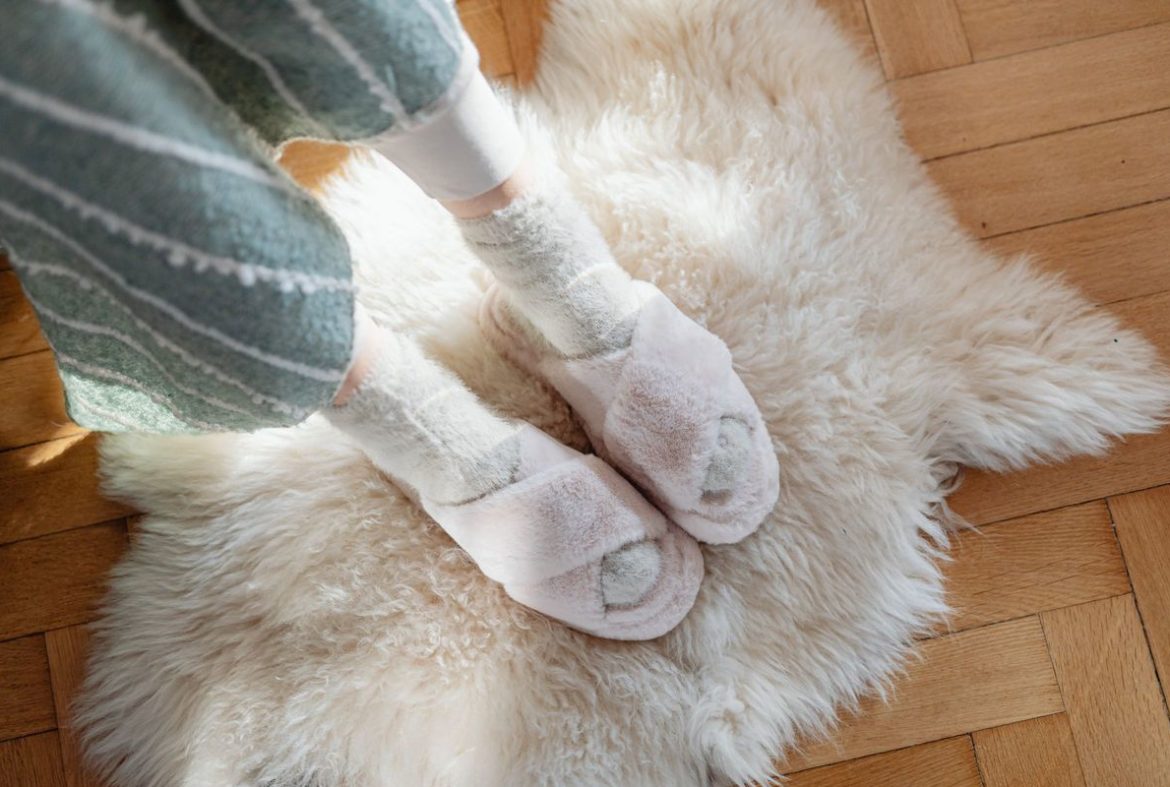
- Swap worn-out slippers. Backless or stretched slippers are easy to trip in. Look for a closed back and a grippy sole.
- Check outdoor footwear. A pair of warm boots with a good grip, that fit comfortably over swollen feet or thick socks, is worth sorting before the ice arrives.
- Light the route. Think about the path from bed to toilet at night, the stairs, and the way from the car or gate to the front door.
- Clear the floor. Loose rugs, trailing cables and clutter on the stairs are common trip hazards.
- Know what to do after a fall. The NHS says that if someone cannot get up, they should try to keep warm while waiting for help, covering themselves with anything they can reach, such as a towel, coat, rug or blanket.
Our guide Preventing falls at home: footwear and simple changes goes into more detail, and Mobility equipment in the UK covers rails, walking aids and where to get them.
Footwear fit checks families often miss
NHS podiatry advice for families picking shoes or slippers for swollen or wider feet includes:
- a secure fastening over the top of the foot, such as laces or Velcro (NHS Western Isles; Leeds Community Healthcare)
- enough length so the toes are not squashed — Leeds Community Healthcare says there should be at least 1 cm of room beyond the longest toe
- enough width and depth across the toes, especially if there are corns or hard skin, so toes are not pressing against the top of the shoe (NHS Western Isles)
- a thick sole for cushioning (NHS Western Isles)
- nothing hard or rigid under the heel — press the inner heel with your hand before trying them on (NHS Western Isles)
- shopping later in the afternoon if the feet tend to swell, when they are at their largest (Leeds Community Healthcare)
- avoiding mules and other backless styles that give little support and can lead to falls; look for a cushioned sole and a fastening that holds the slipper on (Leeds Community Healthcare)
This is general information, not medical advice. If your parent’s feet are swollen, painful or changing, speak to their GP or an NHS podiatrist.
Sources: NHS Western Isles: Footwear for swollen or wider fitting feet (PDF); Leeds Community Healthcare NHS: footwear and podiatry advice.
Ad. If your parent’s feet are wide or swollen and ordinary boots don’t fit, one UK specialist is Cosyfeet. On its boots page (read 26 Oct 2026), Cosyfeet describes a collection of extra roomy boots for men and women, and says you may be entitled to VAT relief if you have a medical condition. See Cosyfeet’s range, including its winter boots. Check the grip and fit suit your parent before they wear them outside. If you buy through this link, Ideas in Medicine Ltd, trading as Big on Health, may earn a commission. That does not change what you pay. Cosyfeet code CFAWIN10 gives 10% off your first order (UK delivery only; excludes sale items and delivery; terms apply).
3. Heating payments: what your parent may get this winter
The help with heating bills is different in Scotland from the rest of the UK. Most of these payments are made automatically, so the main job for families is to check that your parent’s letter arrives and the money is paid.
England, Wales and Northern Ireland: Winter Fuel Payment
GOV.UK says that if your parent was born on or before 27 June 1960 and usually lives in England, Wales or Northern Ireland, they could get between £100 and £300 for winter 2026 to 2027. The amount depends on their age and circumstances in the qualifying week of 21 to 27 September 2026.
- If they live alone, or no one they live with is eligible, GOV.UK says they will get £200 if born between 28 September 1946 and 27 June 1960, or £300 if born before 28 September 1946.
- If they live with someone else who is eligible, or live in a care home, the amount can be lower. GOV.UK sets out each case.
- Most people get it automatically. GOV.UK says eligible people get a letter in October or November, and most will be paid in November or December 2026.
- Some people need to claim, for example if they do not get the State Pension or certain other benefits. GOV.UK says the deadline to claim for winter 2026 to 2027 is 31 March 2027.
- If your parent’s total income is over £35,000, GOV.UK says HMRC will take the payment back. A partner’s income does not count towards their total.
England, Wales and Northern Ireland: Cold Weather Payment
GOV.UK and nidirect say a Cold Weather Payment is £25 for each 7-day period of very cold weather between 1 November 2026 and 31 March 2027. It is paid when the average temperature in the area is recorded as, or forecast to be, zero degrees Celsius or below over 7 consecutive days. It is only for people getting certain benefits, such as Pension Credit, and is paid automatically. If your parent might be entitled to Pension Credit but has never claimed it, it is worth checking, because it opens the door to this and other help.
Scotland: Pension Age Winter Heating Payment and Winter Heating Payment
People living in Scotland cannot get the Winter Fuel Payment or Cold Weather Payments. Instead, mygov.scot says:
- Pension Age Winter Heating Payment has replaced the Winter Fuel Payment in Scotland. To be eligible, your parent must have been born on or before 27 June 1960 and lived in Scotland on at least the last day of the qualifying week, 21 to 27 September 2026. mygov.scot says the payment is between £105.55 and £316.70. If they lived alone, or no one they lived with was eligible, it is £211.15 if born between 28 September 1946 and 27 June 1960, or £316.70 if born before 28 September 1946.
- Most eligible people are paid automatically by Social Security Scotland. mygov.scot says payments start from November 2026 and continue throughout winter, with a letter before payment. If your parent has not been paid by the start of March 2027, it says to contact Social Security Scotland.
- As in the rest of the UK, mygov.scot says HMRC will take the payment back if your parent’s individual income is over £35,000.
- Winter Heating Payment is a separate, single payment for some people on certain benefits, such as Pension Credit. mygov.scot says it is paid automatically from December, does not depend on how cold it is, and lists the current payment as £62.00. The next qualifying week is 2 to 8 November 2026.
Warm Home Discount
GOV.UK says the Warm Home Discount is a one-off £150 discount off the electricity bill for eligible households, for example people who get Pension Credit or live in a low-income household. The supplier applies it to the bill rather than paying money to the person. It is usually automatic, though GOV.UK says people in Scotland may need to apply to their energy supplier. The scheme is not available in Northern Ireland.
Rules and amounts can change, so check the official pages listed at the end before relying on a figure. Beware of scams: nidirect says genuine Winter Fuel Payment and Cold Weather Payment schemes will not send a text or email asking for bank details. If your parent gets help with care or disability costs, see Attendance Allowance in the UK and, for you, Carer’s Allowance in the UK.
4. The flu jab: for your parent and for you
The NHS says adults aged 65 or over can get a free NHS flu vaccine, along with people with certain long-term health conditions and people who live in a care home. It also says you can get a free flu jab if you are the main carer for an older or disabled person, or receive Carer’s Allowance. Many family carers don’t realise they qualify.
- In England, the NHS says you can book through the GP surgery, online or in the NHS App, or find a pharmacy offering free NHS flu vaccination, some without an appointment.
- The NHS says the last date for a flu vaccine this season is 31 March 2027, but it is best to get vaccinated sooner.
- In a Department of Health and Social Care announcement on 22 October 2026, Carers UK said that if you look after a disabled or older person who may be put at risk if you become ill, you are entitled to a free flu jab, and should be able to request it from your GP surgery or local pharmacist.
- Scotland, Wales and Northern Ireland run their own vaccination programmes. nidirect says carers in Northern Ireland should contact their GP or a participating community pharmacy. In Scotland, check NHS inform, and in Wales, check Public Health Wales or the GP practice.
Telling the GP practice you are a carer can make this, and other support, easier to arrange. See How to tell the GP you’re a carer.
5. Medicines and appointments over the holidays
The NHS suggests making sure older relatives get any prescription medicines before the holiday period starts and if bad weather is forecast. If they need help over the holidays when the GP surgery or pharmacy is closed, it says to use NHS 111. Practical points:
- Check how much of each regular medicine is left in early December, and order repeats in good time.
- Write down the GP practice, the pharmacy and any regular appointments, and keep the list where you and any visitor can find it.
- If your parent has a long-term condition such as COPD, ask the GP or nurse whether there is a plan for winter flare-ups. See COPD care at home.
6. If you can’t be there
Many families live too far away to pop in every day. Winter is a good time to agree a plan before anything goes wrong.
- Agree who checks in, and when. A daily call or message at a set time, shared between siblings, means a missed call gets noticed quickly.
- Ask a neighbour or friend. Someone nearby who has a key, or knows where one is kept, can be the first to check.
- Think about a personal alarm. The NHS falls guidance suggests wearing one, or carrying a mobile phone.
- Ask for a care needs assessment. The council (or the Health and Social Care Trust in Northern Ireland) can assess what help your parent needs, and you can ask for a carer’s assessment for yourself. See A carer’s assessment in the UK.
- Arrange paid help in advance. A carer who already knows your parent can step in for shopping, meals, washing and dressing, or company during a cold spell, or after an illness. Our guides Finding a private carer in the UK and Questions to ask before hiring a carer explain the checks, and Home care costs in the UK covers what it costs.
- Plan for a break. If you are the main carer and need time off over the holidays, see Respite care in the UK.
If you are not sure how much help your parent needs, our guide Signs a parent needs help at home may help you talk it through.
Ad. If you’d like someone local who can visit your parent this winter, you can compare carers on PrimeCarers. Ask about availability over the holidays and at short notice, who covers if they are ill, references and an up-to-date DBS check. If you register through this link, Ideas in Medicine Ltd, trading as Big on Health, may earn a commission. That does not change what you pay.
Your winter checklist at a glance
- Heating serviced and working, and the rooms your parent uses kept at a comfortable temperature, ideally at least 18°C.
- Slippers and outdoor shoes that fit, stay on and have a good grip.
- Stairs, landing and the route to the toilet lit at night.
- Winter Fuel Payment or Pension Age Winter Heating Payment letter received, and the payment made.
- Pension Credit checked, which can unlock Cold Weather Payments or Winter Heating Payment and the Warm Home Discount.
- Flu jabs booked for your parent and for you, if you are their main carer.
- Repeat prescriptions ordered before the holidays.
- Food in the cupboards for a few days.
- A daily check-in plan, a neighbour with a key, and a backup if you can’t get there.
When to get urgent help
- Call 999 if your parent is seriously ill or injured, has fallen and may have hurt their head, back, neck or hip, or cannot get up.
- NHS 111 if you are worried and it is not an emergency, including if you think they may be getting very cold. The NHS says to use 111 if you are concerned someone may have hypothermia.
- GP practice for anything that can wait for an appointment.
Related guides

Sources
All checked on 26 Oct 2026.
- NHS: Winter vaccinations and winter health
- NHS: Falls
- NHS: Flu vaccine
- GOV.UK (DHSC): Social media campaign urges Brits to get vaccinated for winter, 22 October 2026
- nidirect: Flu vaccine
- GOV.UK: Winter Fuel Payment
- GOV.UK: Winter Fuel Payment eligibility
- GOV.UK: Winter Fuel Payment, how much you’ll get
- GOV.UK: Winter Fuel Payment, check if you need to claim
- nidirect: Winter Fuel Payment
- GOV.UK: Cold Weather Payment
- GOV.UK: Cold Weather Payment eligibility
- nidirect: Cold Weather Payment
- mygov.scot: Pension Age Winter Heating Payment
- mygov.scot: Pension Age Winter Heating Payment, check if you’re eligible
- mygov.scot: Pension Age Winter Heating Payment, how much you might be paid
- mygov.scot: Pension Age Winter Heating Payment, when you’ll be paid
- mygov.scot: Winter Heating Payment
- mygov.scot: Winter Heating Payment qualifying benefits
- GOV.UK: Warm Home Discount Scheme
This page is general information, not medical, legal or financial advice. Always follow the advice of the GP or health team who know your parent, and check benefit rules on GOV.UK, mygov.scot or nidirect before making plans.
The registered company is Ideas in Medicine Limited, trading as Big on Health (SC505248). Contact: enquiries@bigonhealth.com. There is no public telephone number on this site.